The inspection report, and what comes after it
What is in the report, how to read it, and how the repairs get priced.
Get a priceRead nothing except page one and you still know where you stand. It gives four numbers: doors checked, doors sound, doors that need work, and doors we couldn't get into because they were locked or the resident was out.
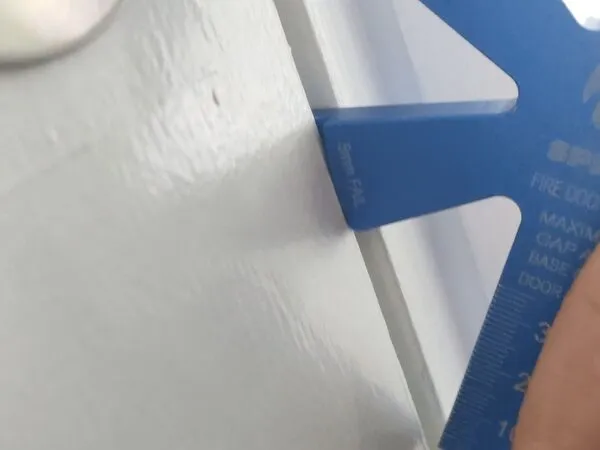
Behind it is the detail, roughly a page per door, with photos. A missing seal is described as missing. A closer that will not latch the door is described that way, and the gap is given in millimetres, never as "a bit big".
Each fault gets one word. Urgent means the door cannot do its job today. The other two are soon, and tidy up when convenient.
What it will not tell you
It will not say the building complies, because that is a decision for you and your fire risk assessor. It will not name who made a door unless the name is on the door either. If there is no label, the report says no label.
When a door cannot be saved
Sometimes a door is past mending. The leaf has split by the lock, the frame is loose in the wall, or there is no certificate and nobody can show what the door is. In that case the report suggests a new certified doorset. We would rather mend than replace, and on the Luton job at two secondary schools and an almshouse, 140 of 147 doors were repaired on site.
Old panelled doors need a word of their own. Raised panels are thin and they weaken the leaf, so if you need a fire door where a panelled one hangs now, our advice is a plain certified doorset.
Doing the repairs
You can ask us to price the repairs from the report. Our own crew does the work, with our BM TRADA / FIRAS-certificated contractors where a job needs them, at a fixed price for the doors listed. Or you can hand the report to a carpenter you already use, and plenty of people do.
Send the postcode and a rough door count. You get a price back the same day.
Get a price